I read approximately forty pages on a typical evening. I read at a pace that is, by the standards of fast readers, deliberate, and by the standards of very fast readers, unhurried. I used to think this pace was a problem — a sign that I was not as serious a reader as I should be, or that I was getting distracted too easily, or that the books I was reading were not engaging enough to pull me through them faster. I have come to think, more recently, that the pace is approximately the right pace for the kind of reader I want to be, and I want to argue for it here.
This entry is not about reading more. There is plenty of writing in the world that argues for reading more, faster, with more discipline. I am sympathetic to some of that argument but I am not going to make it here. I am going to make the smaller and more specific argument for reading slowly, with attention, in evenings that are bounded by the limits of what a tired person can take in.
What the forty-page evening looks like
The forty-page evening usually takes me about an hour and a half. The reading does not happen in a single uninterrupted block. It happens in two or three blocks, with small interruptions — getting up to put the kettle on, looking out the window at something I have heard, marking a passage I want to come back to, pausing to write down a sentence I want to keep, going to look up a word.
The interruptions are part of the practice rather than a deviation from it. The pauses to write down a sentence are part of how I read. The lookups for words I do not know are part of how I read. The looking out the window is part of how I read. The reading is not, structurally, the kind of activity that happens in a sealed sealed-off mental compartment. The reading happens in the apartment, with the apartment ongoing around it, and the apartment is part of the experience.
The forty pages, at the end of the hour and a half, are pages I have actually read. I could tell you, the next morning, what is on them. I could quote particular sentences. I could describe the small turn the chapter made between pages eighteen and nineteen. The pages have been received, in some meaningful sense, rather than only processed.
What faster reading looks like in comparison
I have, at various points in my life, read faster than this. In graduate school I would routinely do eighty or a hundred pages an evening. In a college class on the nineteenth-century novel I read a Dickens of about eight hundred pages in something like six days. I am not, technically, incapable of reading faster.
What I have noticed, looking back, is that the faster reading produced a substantially shallower relationship with the books than I now think I want to have with the books I am reading. I remember the Dickens incompletely. I remember the graduate school reading mostly as a blur of plot and argument with very little of the texture of any specific writer's voice. The fast reading was not retaining what slow reading retains.
I think this is partly a function of the time of life. The graduate school reading had a specific purpose — I was supposed to know certain books for certain reasons by certain dates — and the speed was the appropriate pace for the purpose. The reading I am doing now does not have that purpose. The reading I am doing now is for its own sake, and the appropriate speed for that kind of reading is the speed at which the reading is actually being absorbed.
The argument from cumulative effect
Forty pages an evening, multiplied across the evenings of a year, comes to a meaningful amount of reading. If I read on approximately five evenings a week, which is roughly accurate, that is two hundred pages a week, which is something like ten thousand pages a year, which is roughly forty books of average length. Forty books a year is not a small number of books. It is more than I would actually need to read to maintain the relationship with literature that I want to maintain.
The argument from cumulative effect is that even slow reading, sustained over time, produces a substantial reading life. The argument against speed is not that fast reading produces less in any given evening — it produces more pages — but that fast reading produces a different kind of relationship with the pages, one in which fewer of them are retained and fewer of them produce the small kind of internal shift that the slower reading allows for.
I am after the small internal shift more than I am after the page count. The slow reading produces more of the small internal shift per page than the fast reading does. The trade-off is favorable, on the metric I care about, even though the trade-off would look unfavorable on a metric of pure throughput.
What the marking-passages practice does
One of the slower features of how I read is that I mark passages. I keep a small notebook on the table next to wherever I am reading, and when a sentence catches me I copy it out, often with a sentence or two of my own response after it. The copying is, I would estimate, the single largest contributor to my slow reading pace. A page that has a good sentence on it takes me three or four times as long as a page that does not.
The notebook has, over the past several years, accumulated into a small archive of sentences and responses that I treasure more than I would have predicted. I can flip through it and find sentences I copied out three years ago that still work on me. I can find the small responses I wrote at the time and see how I have changed since I wrote them. The notebook is, in some sense, a sustained external memory of my reading life, in a way that no list of what books I have finished could replicate.
The slow pace makes the notebook possible. If I were reading at a hundred pages an evening I would not be copying out sentences. The notebook is one of the most quietly important practices in my life and it would not exist without the willingness to read slowly enough that the copying could happen.
The case for not finishing books
The slow reading has the secondary effect that I am increasingly willing to not finish books that are not working for me. The fast reading mode treats books as obstacles to be cleared. The slow reading mode treats books as relationships, and a bad relationship is one that you can decide to end rather than one you are obligated to push through.
I currently have three or four books on the side table that I have started in the last six months and not finished. I do not feel bad about any of them. One of them I will probably come back to in a year. One of them I have decided is not for me and will be donated. One of them I have decided I will pick up again when I am in a different mood. None of them is on a list of failures.
The freedom to not finish is, I think, the natural companion to reading slowly. If you are reading slowly enough to actually be in the book, you are also reading slowly enough to know whether the book is working for you, and you have the right to make a real choice about whether to continue. The fast reading mode obscures this choice because it pushes through whether the book is working or not.
What the evening reading actually feels like
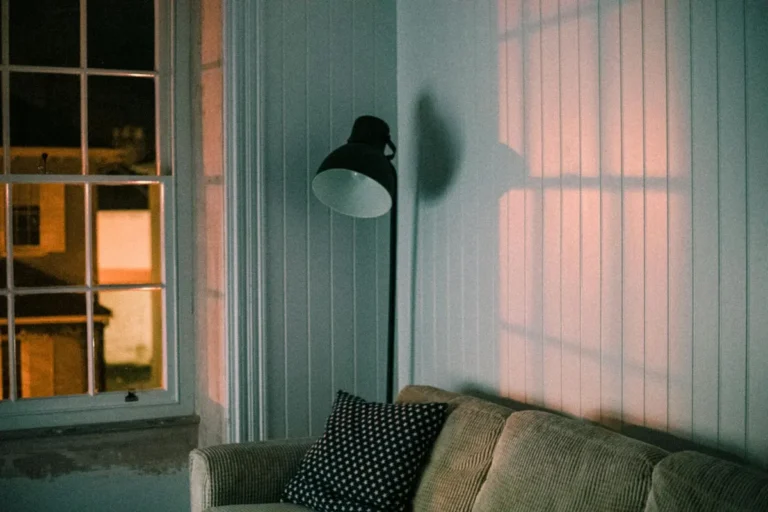
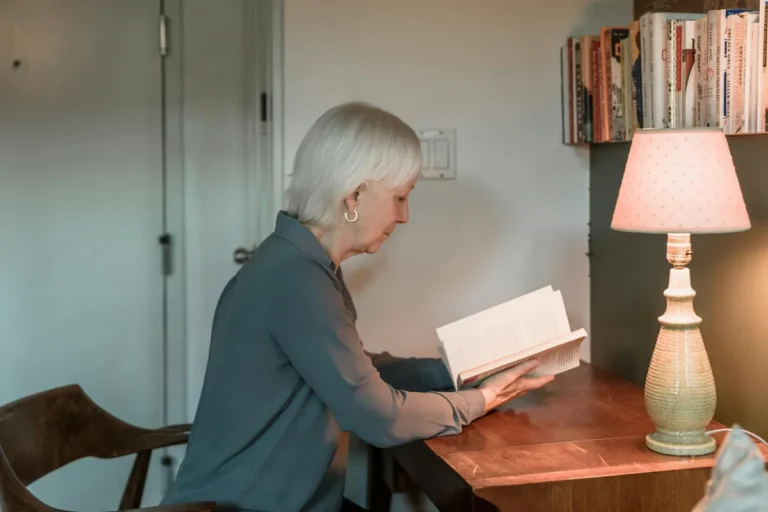
The forty-page evening, on a Tuesday in February, looks like this. The dinner is finished. The dishes are done. The light in the kitchen is off. I am in the chair by the window in the living room. The lamp is on. The kettle has just boiled and there is a cup of tea on the small wooden side table from Dee. The book is open. The notebook is next to the book. The cat is on the other chair, which I do not actually have, but the cat is rhetorically present in the room because the texture of the evening would accommodate one if I had one.
The reading happens for about an hour and a half. The cup of tea cools and gets remade once. The notebook accumulates two or three new sentences. The pages turn at a comfortable pace. The world outside the apartment is dark and quiet and I can hear the radiator and the occasional car. The book is doing its work. I am doing my work, which is the work of receiving the book.
At the end of the hour and a half I close the book and put the bookmark in. I write down the page number in the notebook with the date next to it, which is a small practice I have kept up for years and which produces, over time, a pleasant record of when I was reading what. I turn off the lamp. I go to bed. I am tired in the small clean way that a person who has been reading attentively is tired. The pages are forty pages further along than they were yesterday. I will read again tomorrow. The book and I will arrive at the end of the book in due course, at the pace that has been working between us. There is no hurry. There has not been a hurry for some years now.