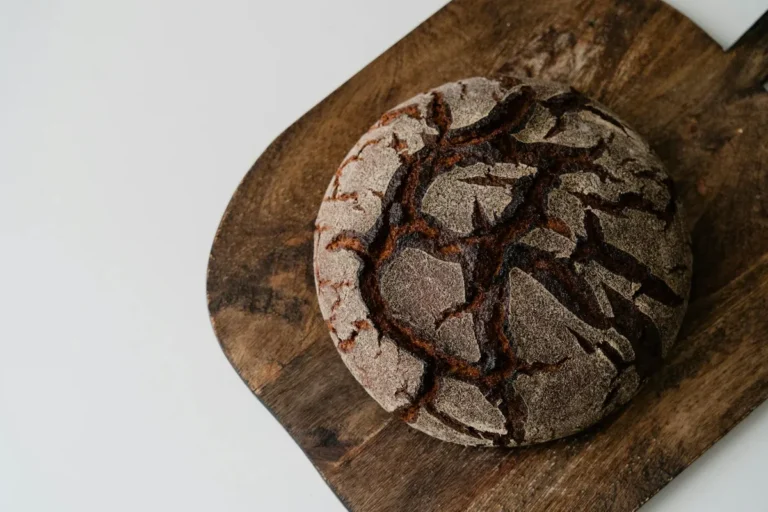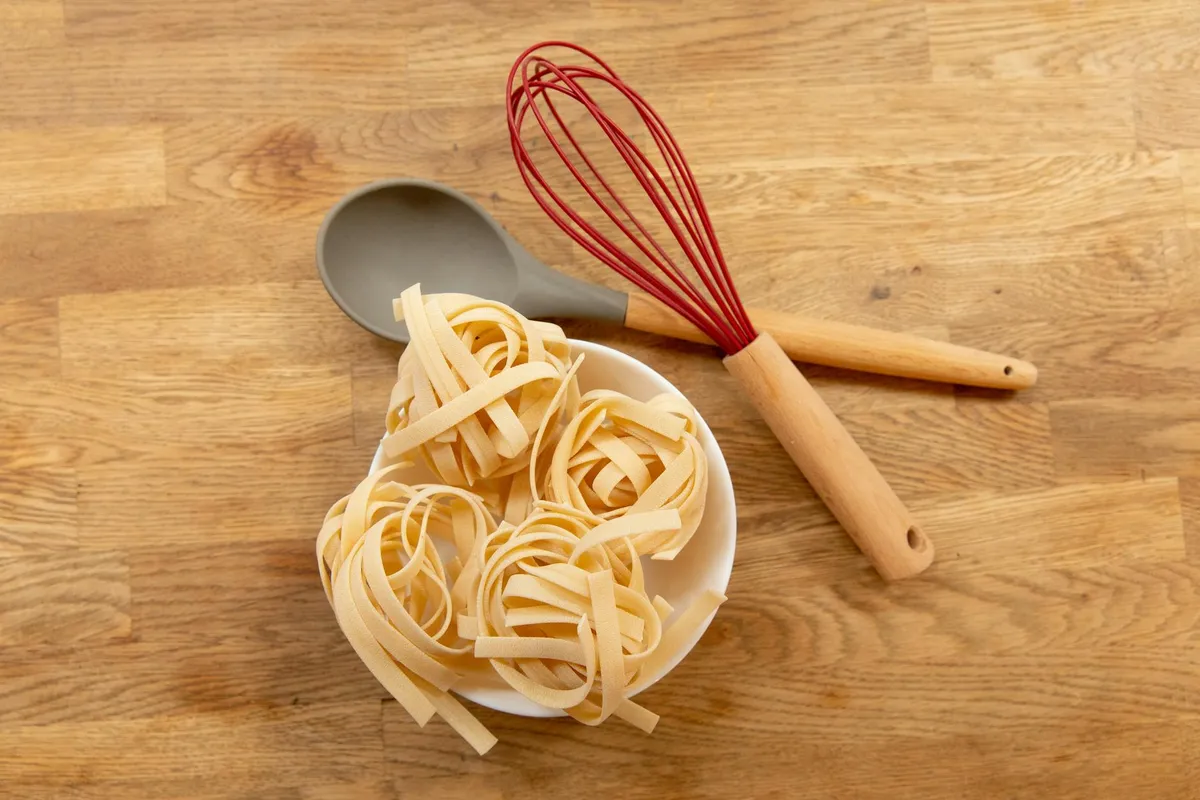
I cook three dinners on a rotation. There is a pasta — usually with brown butter and parmesan and whatever soft herb is alive on the windowsill, which is most often parsley but in summer becomes basil and in winter becomes nothing and the pasta is still fine. There is a soup — a lentil thing with onions and carrots and a lot of black pepper, made in a single pot, eaten with bread from the freezer. And there is a sheet-pan vegetable thing with whatever root vegetables I have on hand and a fried egg on top.
That is the rotation. I have cooked these three dinners on rotation for approximately two years. I am here, in this entry, to defend this practice against the people who keep gently suggesting that I should diversify, learn new recipes, expand my range, try something. Those people, I have come to understand, are wrong.
What the rotation actually feels like
On a Tuesday evening in February, after a slow day at the library and a walk home in the cold and the front door of the apartment finally closing behind me, I do not want to make a decision. I do not want to consult a recipe. I do not want to find out whether the new ingredient I bought experimentally is going to work. What I want is to put the kettle on and stand in front of the open refrigerator and have my body know, without consultation, what dinner is.
What dinner is, on a Tuesday in February, is the lentil soup. I have made it so many times now that I do not have to think about any step of it. I know what the onions look like at the moment they are ready for the carrots. I know how the lentils sound when they have absorbed enough water. The whole production takes about thirty-five minutes and roughly twenty of those minutes I am also reading a book at the kitchen table, because the soup mostly cooks itself once the onions are in.
The lentil soup has become, in the way that certain practiced motions become, a kind of background activity. The cognitive load is close to zero. The pleasure of it is real and it is the pleasure of competence — of doing something I have practiced enough to be good at, even though the thing I am good at is something extremely small.
The argument for repetition I keep hearing against
The argument I hear most often against the three-dinner rotation is that I am missing out on the pleasure of variety. I do not actually think this is true. I think the people who say this are confusing the pleasure of novelty with the pleasure of food. They are not the same pleasure.
Novelty is a pleasure I have access to in many other parts of my life. I read new books constantly. I take new walks. I meet new vendors. I am not, in the broadest sense, deprived of novelty. What I am deprived of, by repetition in the kitchen, is the small daily ordeal of having to decide and produce a new thing. The deprivation of that ordeal is, it turns out, the deprivation of something I am happy to be deprived of.
The food itself is also fine. The lentil soup is good. I would not be eating it for the seventy-eighth time if it were not good. The pasta with brown butter is one of the things I look forward to most in my entire week and the fact that I look forward to it almost every Thursday does not diminish this. If anything it concentrates the pleasure rather than spreading it thin.
The variations I do allow
I want to be clear that the rotation is not rigid. The pasta is the pasta but the herb varies. The soup is the soup but the bread that goes with it varies. The sheet-pan thing is the sheet-pan thing but what is on it depends almost entirely on what looked acceptable at the produce stand on Saturday.
I also have a small annex to the rotation, which is takeout from the Thai place across the river on Friday nights, which I have ordered approximately the same dish from for about three years, which is a kind of meta-repetition that I am also unwilling to apologize for.
What this means in practice is that I am eating a dinner that is structurally familiar approximately six nights of the week. The seventh night I usually eat toast and butter and an apple, standing at the counter, because it is Sunday and I have not been to the store yet. This is also a form of repetition.
What the rotation has done to my grocery shopping
The grocery shopping has become, as a result of the rotation, completely automatic. I buy the same things in roughly the same quantities every week. The shopping takes about twenty minutes including the walk to and from the store. I do not consult a list. I cannot really go wrong because everything I am buying is something I know I am going to use.
This has the additional effect that I waste almost no food. The vegetables I buy on Saturday are reliably eaten by Friday. The eggs from Roy last exactly the right amount of time. The bread from the freezer rotates in and out at a pace that prevents accumulation. None of this required any planning or system. It required only the decision, two years ago, to stop trying to cook a new thing every night.
The case for being boring
I think there is a version of being an interesting person that involves cooking an interesting and changing meal every night, and I think that version exists and is valid for people who actually find joy in the experimentation. I am not that person. I have tried to be that person. I was that person, sort of, for several years in my twenties, when I lived in a city and had more energy and was trying to learn things. The trying to learn things was good. The eventual realization that I had learned enough things and now wanted to repeat the small handful of things I had learned and liked — that was also good.
The three-dinner rotation is one of the most quietly correct decisions I have made about how to live. The Tuesday lentil soup tonight will be the same lentil soup I had two Tuesdays ago. I will eat it at the table by the window with the radiator clicking and a book open beside the bowl. I will not be missing out on anything.